Quality Control: Avoiding the AI Slop Trap and Measuring Ad Success
Practical checkpoints for keeping AI-generated ads authentic, plus a framework for tracking and iterating on 100+ live variations.
Practical checkpoints for keeping AI-generated ads authentic, plus a framework for tracking and iterating on 100+ live variations.
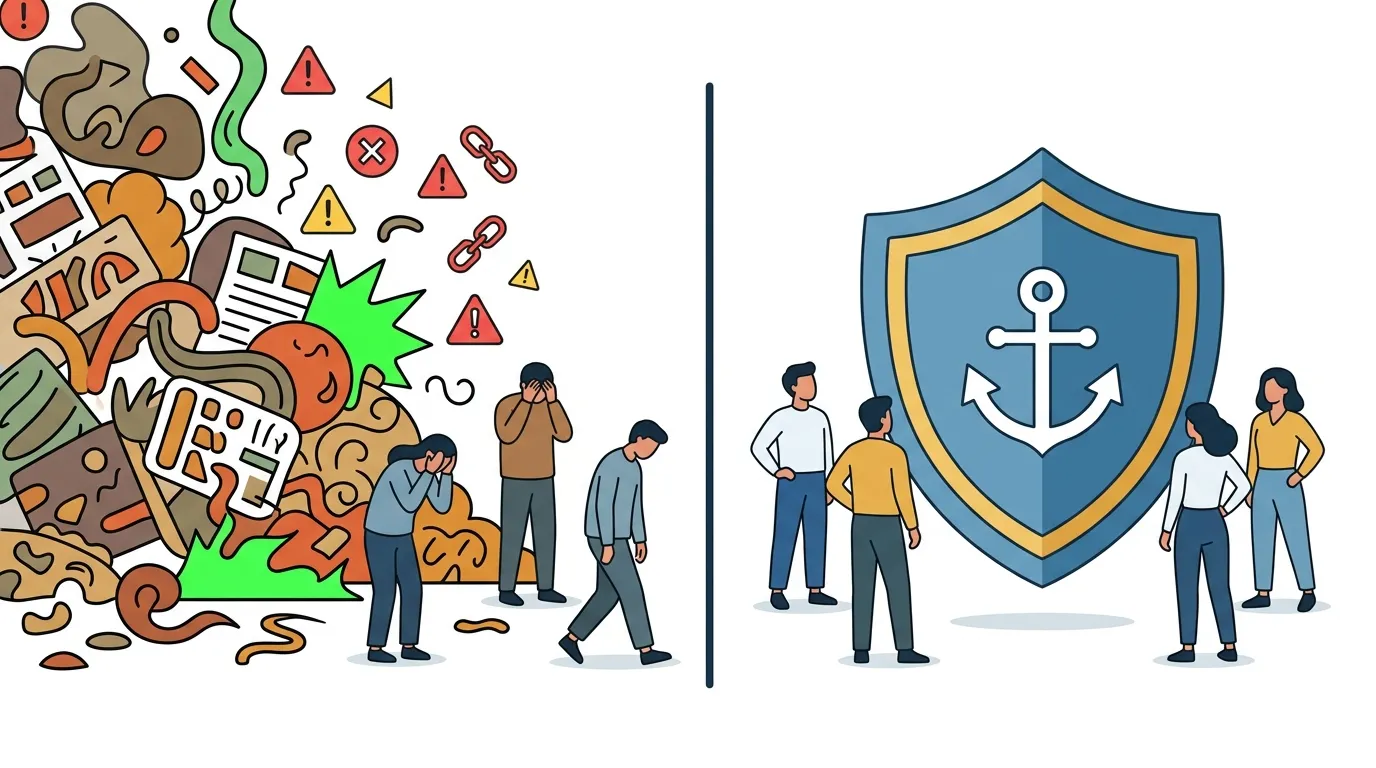
Scroll through any major ad platform today and you'll notice something strange happening. The ads look.. familiar. Same lighting. Same voiceover cadence. Same slightly-too-smooth stock-photo faces. Same three-second hook that somehow feels identical across a dozen unrelated brands. Marketers have a name for this phenomenon now, and it isn't flattering: AI slop.
The irony is sharp. Generative AI was supposed to unlock creative abundance, letting teams produce more variations, test more angles, and personalize at a scale that was previously impossible. Instead, many brands are discovering that volume without judgment just means more noise, faster. Consumers have started to notice, and they are pushing back with the one currency that matters most: their attention.
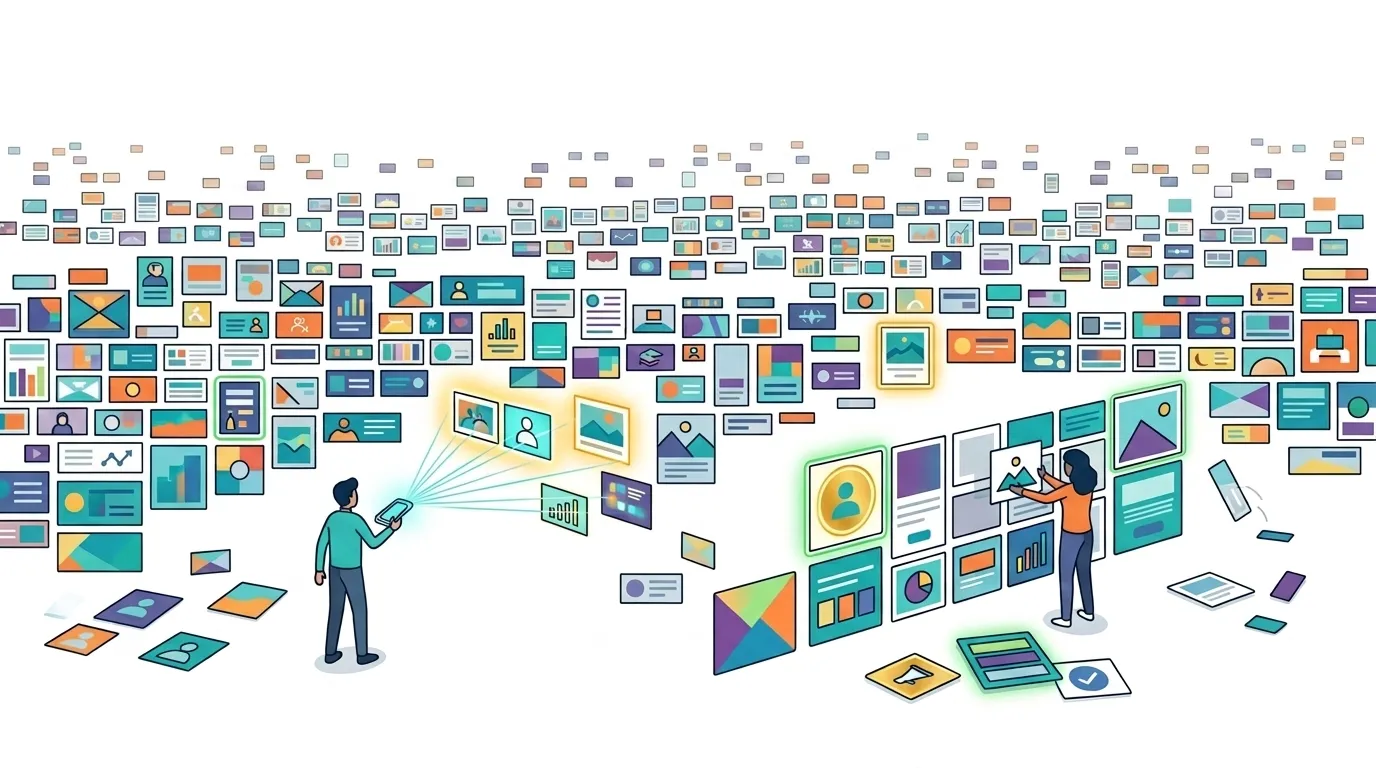
This post covers two sides of the same coin. First, how to avoid falling into the AI slop trap by keeping real human judgment in your production pipeline. Second, once you've launched a large batch of AI-assisted ad variations (we're talking 100 or more), how to actually track, measure, and iterate on their performance without drowning in dashboards.

"AI slop" isn't just a snarky label for content that was made with AI. Plenty of excellent, high-performing ads today involve AI somewhere in the pipeline, from ideation to editing to asset generation. The problem isn't the tool. The problem is what happens when the tool replaces judgment instead of supporting it.
Slop tends to share a few recognizable traits:
Consumer backlash against low-effort AI content isn't really about the technology. It's about trust. When people sense that content was mass-produced without a human actually caring about the outcome, they discount the brand behind it, even if they can't articulate exactly why.
The backlash shows up in measurable ways: rising ad fatigue rates, lower click-through on batches of near-identical creative, more negative comments calling out "AI-generated" content, and declining brand favorability scores in categories that have leaned hardest into fully automated content pipelines. Attention is a finite resource, and audiences are getting sharper at detecting when a brand hasn't bothered to earn theirs.

The phrase "human in the loop" gets used loosely, so it's worth being precise about what it actually means in an ad production context. It does not mean a person glances at the final output before it gets scheduled. It means a person is embedded at specific decision points throughout the process, where their judgment materially changes the outcome.
Here's where that judgment matters most:
1. Strategic brief and insight development AI can synthesize research and suggest angles, but the core insight, the thing that makes an ad true and specific to your brand, usually comes from a human who understands the customer, the category, and the cultural moment. This is the step most teams skip when they rush straight into generation, and it's the step most responsible for slop.
2. Creative direction and tone-setting Before generating dozens of variations, someone needs to define what "on brand" actually looks and sounds like for this specific campaign. Reference images, tone-of-voice guides, and explicit "avoid this" examples give the generation process real constraints instead of a blank, generic default.
3. Selection and curation This is arguably the most underrated step. AI tools are good at generating options; they are not good at knowing which option will resonate with your specific audience in your specific market at this specific moment. A human needs to sit with the outputs, apply taste, and cut the ones that are technically fine but emotionally hollow.
4. Final quality and brand-safety review Even with strong prompts and good curation, generated content can drift, introduce subtle inaccuracies, misrepresent a product feature, or include something that reads fine in isolation but poorly in context. A final human pass catches what automated checks miss.
Build a simple "insight to output" traceability habit. For every ad variation, be able to answer in one sentence: what specific human insight is this creative expressing? If you can't answer that, the ad is probably slop, regardless of how polished it looks.
| Stage | Slop-Prone Workflow | Human-in-the-Loop Workflow |
|---|---|---|
| Brief | Generic prompt fed directly into a generation tool | Human-written brief grounded in a specific customer insight |
| Volume strategy | Generate as many variations as possible, launch all of them | Generate broadly, curate narrowly, launch only what earns its place |
| Brand voice | Left to the model's default tone | Explicit voice guide and reference examples supplied upfront |
| Review step | Automated pass or none at all | Human review focused on emotional resonance and brand fit, not just correctness |
| Iteration | React to aggregate performance only | React to performance plus qualitative signals like comments and sentiment |
| Outcome | Technically correct, emotionally flat content | Content that feels intentional and specific to the brand |
The distinction isn't "AI vs. no AI." It's whether human judgment is actually shaping outcomes or just rubber-stamping them.
Avoiding slop at the creative stage solves half the problem. The other half shows up after launch, when a team suddenly has dozens or hundreds of live ad variations and needs to figure out, quickly, which ones are actually working. This is where a lot of teams get overwhelmed. More variations means more data, and more data without a system just becomes noise.
Here's a practical framework for staying on top of it.
Not every metric deserves equal attention, and checking everything with equal weight is how teams get lost. Set up a tiered structure before the ads go live.
Resist the urge to make decisions off Tier 2 or Tier 3 metrics alone. A high click-through rate on an ad that doesn't convert is often a sign of curiosity clicks or clickbait framing, not genuine interest. Always weigh engagement against the north star metric before scaling anything up.
With 100+ variations live, comparing them one by one is impossible to do meaningfully. Instead, tag each variation by the specific element it's testing: hook style, visual format, voiceover tone, call-to-action phrasing, or offer framing. This turns a flat pile of ads into a structured experiment.
When you tag variations this way, you can answer questions like "do documentary-style hooks outperform direct-address hooks across the whole batch" instead of just "which single ad has the best number this week." The former tells you something you can act on across future campaigns; the latter is often just noise from a small sample.
One of the most common mistakes with large creative batches is killing or scaling ads too early, before they've collected enough impressions or conversions to be statistically meaningful. Define a minimum spend or impression threshold per variation before it's eligible for a keep, kill, or scale decision. This keeps the process disciplined instead of reactive.
A variation that looks weak after 200 impressions might simply not have had a fair chance yet. A variation that looks strong after 200 impressions might just be a statistical fluke. Patience at this stage saves budget later.
You don't need enterprise-grade business intelligence tooling to manage this well. A straightforward dashboard with the following columns, refreshed daily or weekly depending on your spend velocity, is usually enough:
| Column | Purpose |
|---|---|
| Variation ID / tag | Which cluster and specific version this is |
| Spend to date | Whether it has crossed your minimum threshold |
| Tier 1 metric | The business outcome, compared against your benchmark |
| Tier 2 metric | Engagement health, flagged if trending down |
| Sentiment flag | Manual or automated flag for negative comment patterns |
| Decision | Keep, kill, iterate, or scale |
Reviewing this weekly, rather than staring at a live feed constantly, keeps decisions grounded and prevents overreacting to daily noise.
Once you've identified winning and losing patterns, resist the temptation to tweak individual ads endlessly. Instead, roll insights into structured next rounds. If direct-address hooks are consistently outperforming documentary-style ones across your tagged clusters, that becomes a rule for the next batch of generation, not just a note for one ad. This is how a large-scale AI-assisted workflow actually gets smarter over time instead of just producing more volume.
Keep a living "creative learnings" document alongside your dashboard. Every round of iteration should add one or two concrete, reusable insights to that document. Over several campaigns, this becomes one of the most valuable assets your team owns, often more valuable than any single winning ad.
The tension between "produce a lot of content" and "keep every piece of it authentic" is real, but it's not unsolvable. The brands doing this well treat AI as a force multiplier for human creative judgment, not a replacement for it. They keep people embedded at the insight, direction, curation, and review stages, and they build disciplined measurement systems so that scale doesn't turn into chaos once the ads go live.
The brands doing it poorly treat generation as the whole job. They skip the insight work, skip the curation, and let the algorithm decide what "good" looks like by default. The result is technically functional but forgettable content, and audiences are increasingly quick to notice and disengage from it.
Quality control, in this context, isn't a single checkpoint. It's a mindset that runs from the first prompt to the hundredth live variation: does this still feel like something a person cared about, and are we actually learning from what the data is telling us? Brands that can answer yes to both questions consistently are the ones who will keep earning attention, even as AI-generated content keeps flooding every feed.
1. Is all AI-generated ad content considered "AI slop"?
No. AI slop refers specifically to content that feels generic, repetitive, or emotionally hollow because it was produced without meaningful human judgment. Plenty of AI-assisted content performs well and feels authentic when a human shapes the insight, tone, and final selection.
2. How many human checkpoints does a healthy AI ad workflow actually need?
At minimum, four: strategic insight development, creative direction and tone-setting, selection and curation of generated options, and a final brand-safety and quality review. Skipping any of these significantly raises the risk of producing slop.
3. What's the biggest mistake teams make when managing 100+ live ad variations?
Making keep-or-kill decisions before variations have hit a minimum spend or impression threshold. Judging performance too early leads to killing ads that just needed more time and scaling ads that were only a statistical fluke.
4. Which metrics should carry the most weight when evaluating ad performance?
North star business metrics like conversion rate, cost per acquisition, or return on ad spend should always outweigh engagement metrics like click-through rate. Engagement signals are useful diagnostics, but they don't guarantee that an ad is actually driving the outcome you care about.
5. How can a team tell if audience fatigue with AI content is starting to hurt a campaign?
Watch for declining engagement trends across similarly styled variations, an uptick in negative or dismissive comments, and dropping favorability or sentiment scores even when the technical metrics like click-through rate stay stable. These are early warning signs worth investigating before performance craters.